
Catastrophic events in star deaths may reveal more about cosmic phenomena

Astronomers are searching for answers regarding a series of gamma-ray bursts (GRBs), which are the most powerful explosions in the Universe. These energetic events typically occur when a star dies in a dramatic way or is torn apart by a black hole. Observations of repeated explosions of this magnitude are extremely rare, as the phenomena responsible for these bursts are of an extraordinarily catastrophic nature. However, in July, scientists detected multiple explosions in just a single day, an unprecedented event. “This is a unique case in 50 years of GRB observations,” said Antonio Martin-Carrillo, assistant professor of astrophysics at University College Dublin, Ireland. He is a co-author of a study published on August 29 in The Astrophysical Journal Letters, which details the observation.
Normally, gamma-ray bursts last from milliseconds to minutes. However, in this specific event, the signal repeated three times over a 24-hour period, making the bursts last 100 to 1,000 times longer than the usual duration of individual GRBs, as explained by Andrew Levan, co-author of the study and astronomer at Radboud University, Netherlands.
Although the exact cause of these explosions is still unknown, scientists have some theories. Understanding this phenomenon could revolutionize the understanding of the catastrophic processes related to star deaths. “This event is so rare that we may have seen only one in the last 50 years, or perhaps it’s just the beginning, and we could find many more if we investigate further,” Levan speculated. “Since GRBs originate from the violent deaths of stars, they could provide us with valuable insights into the most extreme ways stars end their life cycles.”
In Search of a Distant Galaxy
On July 2, NASA’s Fermi Gamma-ray Space Telescope detected a sequence of four GRBs in a region of the sky, sparking curiosity among astronomers about the possibility that they could all be connected to the same source. A later analysis revealed that three of these GRBs were, in fact, related.
Although Fermi only provided an approximate location of the explosions, more precise data were obtained thanks to the Einstein Probe Telescope — a joint mission of the Chinese Academy of Sciences, the European Space Agency, and the Max Planck Institute for Extraterrestrial Physics. With this data, astronomers were able to direct ground-based telescopes to further investigate the phenomenon. Additionally, the Einstein Probe had detected X-ray activity the day before the explosions, which was an important clue for the scientists.
Following the Einstein Probe’s findings, the NASA Neil Gehrels Swift Observatory, with its X-ray instrument, also provided more detailed location data, helping guide the telescopes for precise observation of the phenomenon.
These mysterious events continue to challenge astronomers, who are seeking answers that may unveil unprecedented aspects of star deaths and the extreme forces that govern the cosmos.
About The Author


More
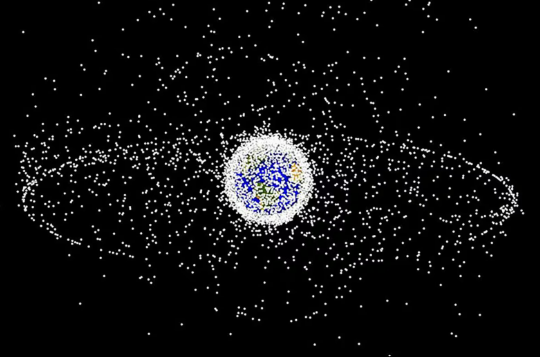
♻️ Recycling Space Debris Could Be the Key to Keeping Earth’s Orbit Safe
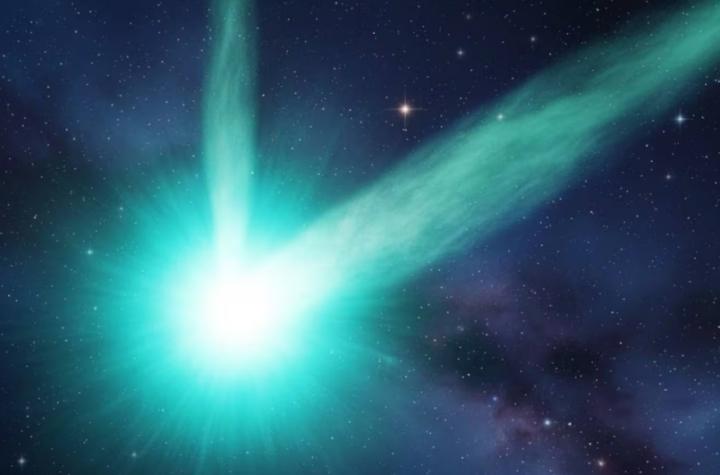
Juice Probe Captures Images of Active Interstellar Comet 3I/ATLAS, Suggesting Possible Double Tail
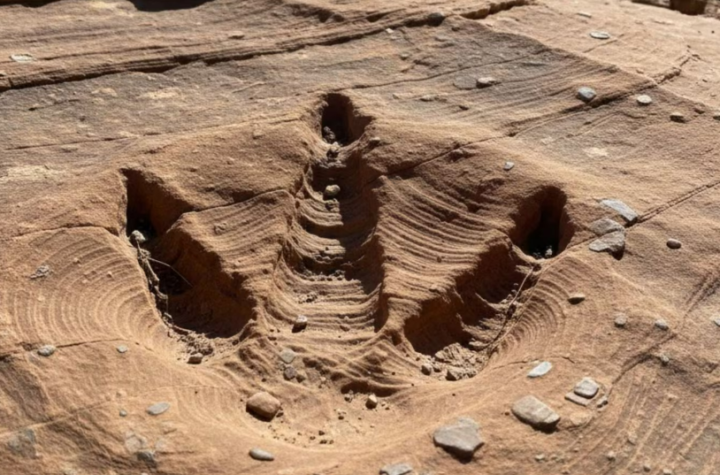
Largest Collection of Fossilized Carnivorous Dinosaur Tracks Ever Found Surprises Scientists in Bolivia