
The eruption of the Hunga Tonga-Hunga Ha’apai volcano on January 15, 2022, in the South Pacific, was one of the most powerful ever recorded in modern times. The explosion had a force equivalent to one hundred nuclear bombs, triggering a tsunami up to 15 meters high and sending a plume of ash and gas over 50 kilometers into the atmosphere — far above the altitude of commercial aircraft.

But the event’s impact turned out to be even more astonishing than initially believed. Recent studies revealed that the waves generated by the eruption reached the thermosphere — a layer of Earth’s atmosphere that begins around 85 km in altitude and can extend up to 600 km. This region is critical for the operation of low-orbit satellites, meaning that disturbances there could potentially disrupt communication systems, navigation, and weather forecasting.
Using satellite data and atmospheric modeling, a team of researchers investigated the types of waves responsible for such an extreme disruption. Among the possibilities were Lamb waves — which travel long distances along the Earth’s surface — and secondary gravity waves, created when the initial shock wave dissipates in the upper atmosphere. The study concluded that these secondary gravity waves were the main cause of the disturbance, due to their high speeds and strong magnitudes, which matched satellite observations.
This discovery underscores how powerful geological events, even those occurring at the Earth’s surface or under the sea, can have consequences that reach the highest layers of the atmosphere — and even space itself. For those who explore and observe the ocean, it’s a powerful reminder of how deeply connected natural systems are, from the ocean floor to beyond the stratosphere.
About The Author

More
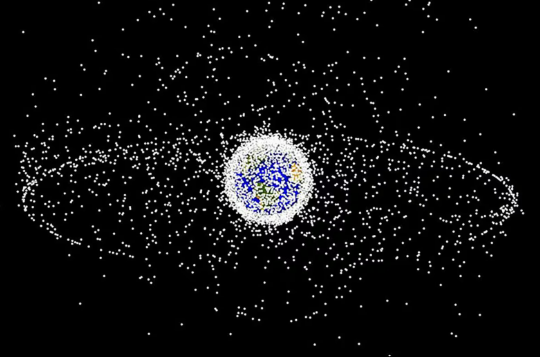
♻️ Recycling Space Debris Could Be the Key to Keeping Earth’s Orbit Safe
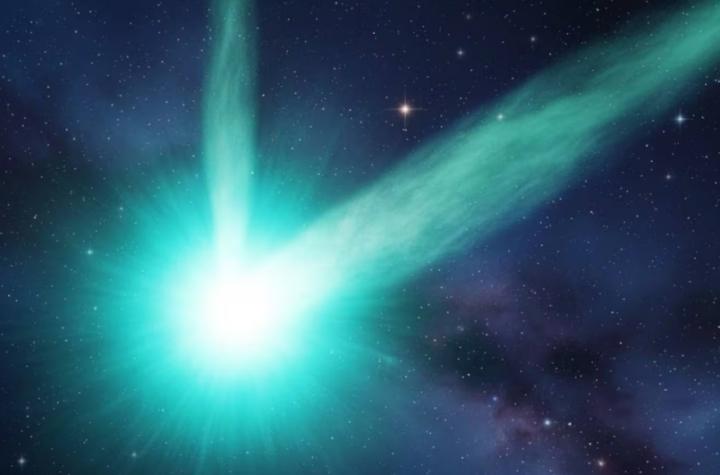
Juice Probe Captures Images of Active Interstellar Comet 3I/ATLAS, Suggesting Possible Double Tail
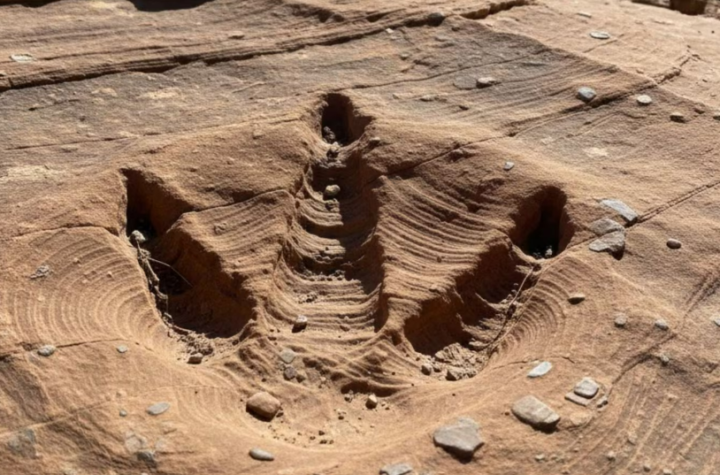
Largest Collection of Fossilized Carnivorous Dinosaur Tracks Ever Found Surprises Scientists in Bolivia