
The deep ocean never ceases to amaze science with unexpected discoveries. The most recent is the thick-snouted snailfish (Careproctus colliculi), a species never before recorded. The animal was first observed in 2019 using advanced underwater exploration technology from the Monterey Bay Aquarium Research Institute (MBARI) in California. Now, researchers from the State University of New York at Geneseo, in collaboration with colleagues from the University of Montana and the University of Hawai‘i, have officially described the new species in a scientific article.

According to Professor Mackenzie Gerringer, who participated in the study, this discovery highlights how much remains to be explored in the deep sea. “The unique adaptations of these organisms show just how surprising life on Earth can be. It’s a reminder of the power of curiosity and scientific exploration,” she said.
A diverse family full of adaptations
Snailfish belong to the Liparidae family, which already has more than 400 species identified worldwide. They share peculiar features such as gelatinous bodies, loose skin, large heads, and tapered tails. Many species also have a suction disc on their bellies, which allows them to cling to the seafloor or even “hitch a ride” on larger animals.
This time, scientists announced not just one, but three new species:
- Careproctus colliculi (thick-snouted snailfish): pinkish in color, with a rounded head, large eyes, and broad pectoral fins;
- Careproctus yanceyi (dark snailfish): completely black body, horizontal mouth, and robust appearance;
- Paraliparis em (elegant snailfish): long, laterally compressed body, angled jaw, and lacking the suction disc typical of many snailfish.
These animals can be found in a variety of marine habitats, from shallow tidal pools to extreme deep-sea environments.
A meeting more than 3,000 meters deep
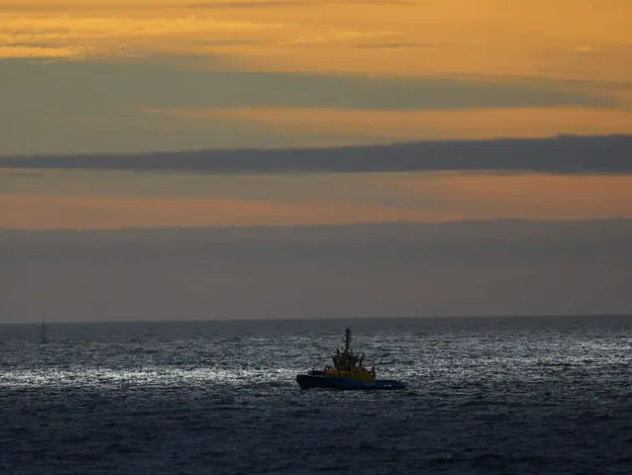
The first sighting of the thick-snouted snailfish occurred during an expedition aboard the Western Flyer, a research vessel operated by MBARI. Using the Doc Ricketts submersible, scientists were exploring the edges of the Monterey Canyon, about 100 km off the coast of California, when they came across the small fish at an astonishing 3,268 meters deep.
The remotely operated submersible is equipped with mechanical arms, high-definition cameras, and collection systems. It was this very technology that allowed scientists to record and study in detail one of the ocean’s most discreet and enigmatic creatures.
The discovery of these new species reinforces the idea that the deep sea still holds secrets that science is only beginning to unravel.
About The Author




More
♻️ Recycling Space Debris Could Be the Key to Keeping Earth’s Orbit Safe
Juice Probe Captures Images of Active Interstellar Comet 3I/ATLAS, Suggesting Possible Double Tail
Largest Collection of Fossilized Carnivorous Dinosaur Tracks Ever Found Surprises Scientists in Bolivia