
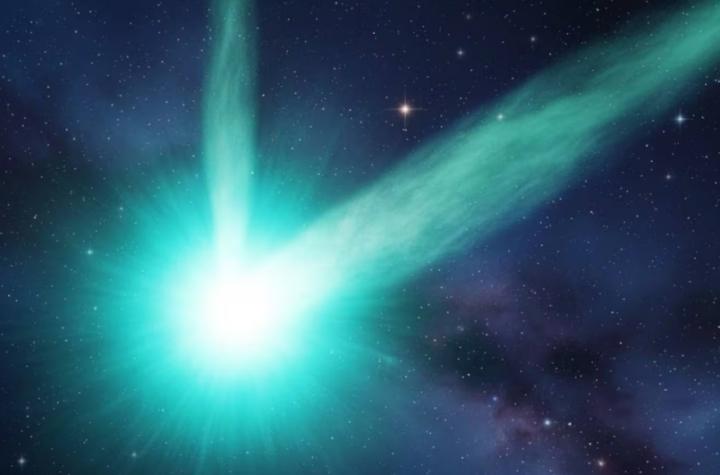
A rare and mysterious object recently spotted by astronomers may be the oldest comet ever observed. Named 3I/Atlas, this celestial traveler is expected to pass near the Sun at the end of this month — and it might be three billion years older than our own Solar System.

According to Chris Lintott, professor of Astrophysics at the University of Oxford, “This is an object from a region of the galaxy we’ve never had the chance to observe up close. There’s about a two-thirds chance that this comet is older than our Solar System and has been wandering through interstellar space ever since.”
The Atlas comet was first detected on July 1, 2025, by a telescope in Chile when it was approximately 670 million kilometers away from the Sun. Astronomers have calculated that it’s moving at an impressive 221,000 km/h (61 km/s) — a speed that suggests it could be over seven billion years old.
“This comet likely comes from a very ancient part of the Milky Way known as the thick disk, where the oldest stars in our galaxy formed some 10 to 12 billion years ago,” explained Brazilian astronomer Marcelo de Cicco.
Scientists estimate that Atlas measures between 440 meters and 5.5 kilometers in diameter, although precise measurements are difficult. Like other comets, it’s made of ice and dust, releasing a bright cloud of gas as it approaches the Sun.
What makes Atlas even more fascinating is that it comes from beyond our Solar System. Only three other interstellar objects have ever been identified by astronomers: ‘Oumuamua (2017), Borisov (2019), and now Atlas (2025).
Given its rarity, NASA and other space agencies around the world have turned their instruments toward the comet, hoping to gather as much data as possible. Researchers believe that understanding Atlas could offer valuable clues about the origins of the universe itself.
In a recent video, science reporter André Biernath shared more insights about the Atlas comet and debunked some of the myths surrounding this extraordinary celestial visitor.
About The Author


More
♻️ Recycling Space Debris Could Be the Key to Keeping Earth’s Orbit Safe
Juice Probe Captures Images of Active Interstellar Comet 3I/ATLAS, Suggesting Possible Double Tail
Largest Collection of Fossilized Carnivorous Dinosaur Tracks Ever Found Surprises Scientists in Bolivia