
Off the southern coast of South Korea, on the island of Jeju, lives a remarkable community of women who have defied human limits for generations. Known as Haenyeo, these women dive daily — even in the freezing cold of winter — to collect sea urchins, abalone, and seaweed, all without oxygen tanks or any breathing equipment.
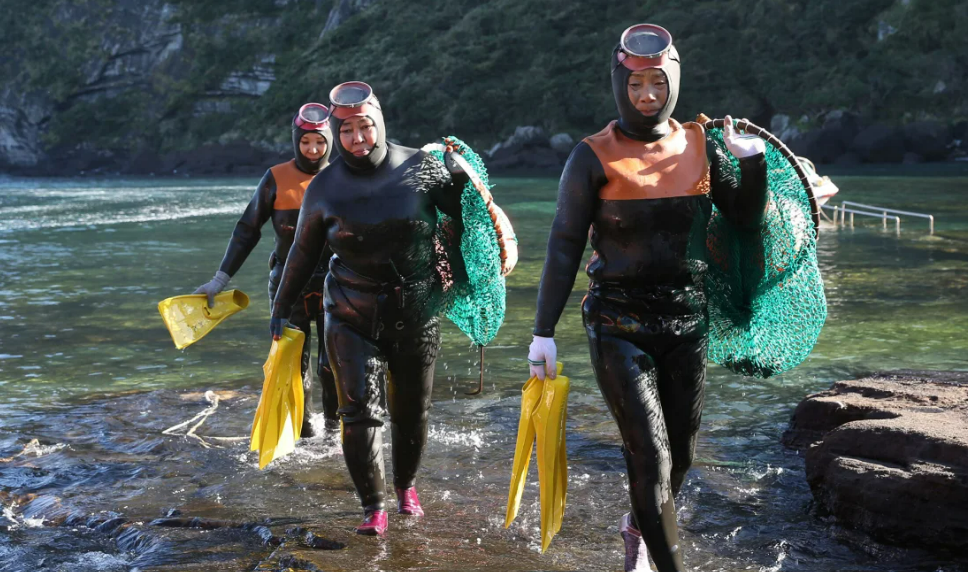
These divers, who descend as deep as 18 meters and spend hours each day underwater, continue this tradition even during pregnancy and into old age. Passed down from mother to daughter, this centuries-old skill has now captured the attention of scientists around the world.
An Extraordinary Ability
Curious about the physical endurance of the Haenyeo, researchers from South Korea, Denmark, and the United States set out to discover whether this impressive ability was purely a result of lifelong training or if genetics also played a role.
Their findings, published in Cell Reports in early May, suggest that the Haenyeo may indeed have developed genetic adaptations that help their bodies cope with the physical stress of free diving. These discoveries not only provide fascinating insight into human evolution but could also contribute to future treatments for blood pressure and cold tolerance disorders.
Diving Into DNA
The study included 91 women: 30 Haenyeo, 30 non-diving women from Jeju, and 31 women from mainland South Korea, all around the age of 65. Researchers measured heart rate, blood pressure, spleen size, and sequenced each participant’s genome using blood samples.
To safely simulate diving for participants with no experience, the team used a clever method: participants were asked to hold their breath while submerging their faces in cold water. This triggers the “mammalian dive reflex,” a natural response that slows the heart rate, raises blood pressure, and contracts the spleen — similar to what happens during actual diving.
Genetics in Favor of Tradition
The analysis revealed that both the Haenyeo and non-diving women from Jeju were significantly more likely than mainland women to carry a genetic variant linked to lower blood pressure. This may have been an evolutionary advantage, especially since many Haenyeo dive during pregnancy — when high blood pressure could endanger the fetus.
Another interesting find was the increased presence of a gene variant associated with cold and pain tolerance among Jeju women. While the researchers did not directly test participants’ cold resistance, this genetic trait could explain how Haenyeo manage to dive year-round, even before wetsuits were common. Until the 1980s, they dove in cotton clothing, with little to no protection from the elements.
A Disappearing Legacy
Despite the Haenyeo’s resilience and cultural significance, researchers warn that the tradition is fading. Most current divers are elderly, and younger generations are choosing different paths. The future of this unique matrilineal knowledge — blending culture, genetics, and the ocean — remains uncertain.
Jeju Island, often called the “Hawaii of Korea,” is not only rich in natural beauty but also home to one of the world’s most fascinating examples of human connection to the sea.
About The Author



More
♻️ Recycling Space Debris Could Be the Key to Keeping Earth’s Orbit Safe
Juice Probe Captures Images of Active Interstellar Comet 3I/ATLAS, Suggesting Possible Double Tail
Largest Collection of Fossilized Carnivorous Dinosaur Tracks Ever Found Surprises Scientists in Bolivia