
A recent study presented by researchers from the University of Portsmouth at the 2025 National Astronomy Meeting has introduced an intriguing theory: Earth — along with the entire Milky Way — might be located inside a massive region of space that is less dense than the rest of the cosmos. This area would be like a “cosmic bubble,” with less matter and energy than expected.

This hypothesis emerges as a possible explanation for one of the biggest puzzles in modern astrophysics: the so-called Hubble tension. This term refers to the discrepancy between two different methods used to measure how fast the Universe is expanding. On one hand, measurements taken from nearby galaxies indicate a faster expansion rate. On the other, data from the early Universe — such as cosmic background radiation — suggest a slower pace.
To reconcile this disagreement, scientists suggest that we might be inside a region with about 20% less density than the cosmic average. This would affect how light travels to us and could create the illusion that the Universe is expanding faster than it really is.
According to astronomer Indranil Banik, lead author of the study, this model of a “local void” fits observational data far better than previous models, such as those based on the Planck satellite, which assumes a more uniform Universe.
The team used data from baryon acoustic oscillations (BAOs) — sound waves from the Big Bang that became imprinted in the fabric of space — as a sort of cosmic measuring stick. By comparing these signals to measurements of redshift (which shows how much light from galaxies has been stretched over time), the researchers found distortions that align with the presence of a cosmic void around us.
If this theory is correct, it could reshape how we understand the Universe — from its actual age to its large-scale structure. It may even explain why our observations from Earth differ from what would be expected if we were in a denser region of space.
The next step for the team is to compare this model with other methods, such as cosmic chronometers — ancient galaxies that stopped forming stars billions of years ago. The light emitted by these galaxies can help verify whether the Universe’s expansion matches the pattern predicted by the cosmic void model.
If future results continue to support the theory, we may be on the verge of a major shift in cosmology — and perhaps a new understanding of our place in the cosmos.
About The Author


More
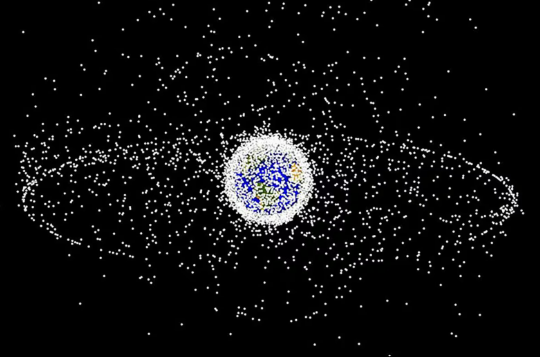
♻️ Recycling Space Debris Could Be the Key to Keeping Earth’s Orbit Safe
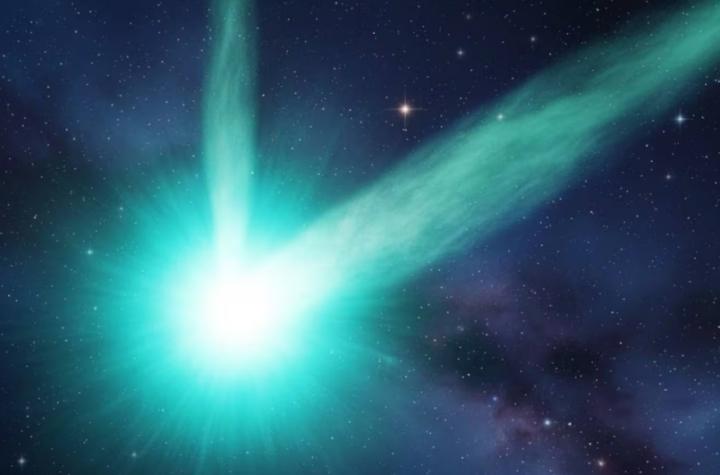
Juice Probe Captures Images of Active Interstellar Comet 3I/ATLAS, Suggesting Possible Double Tail
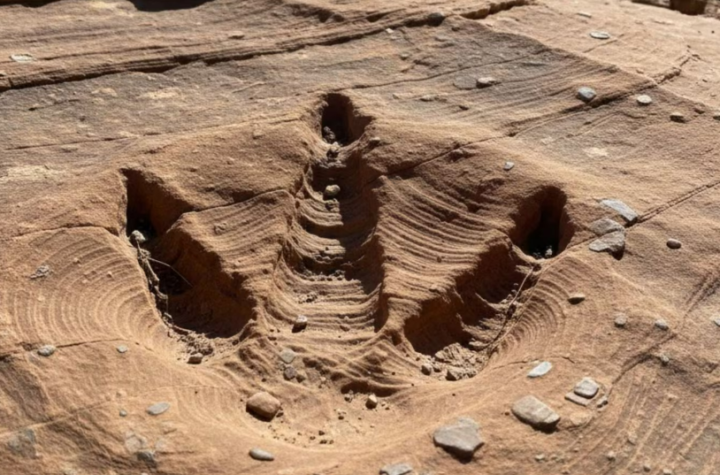
Largest Collection of Fossilized Carnivorous Dinosaur Tracks Ever Found Surprises Scientists in Bolivia