
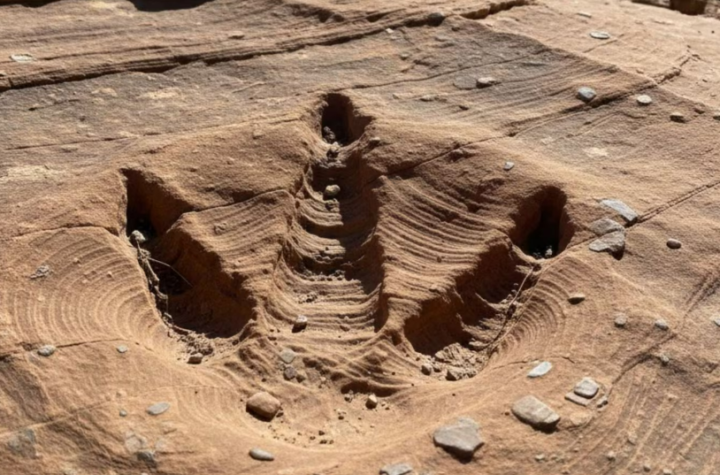
A true prehistoric treasure has been uncovered at Torotoro National Park in Bolivia: more than 16,000 fossilized dinosaur tracks have been identified in a single location, marking one of the most impressive paleontological discoveries ever recorded in South America.

The area, known as Carreras Pampa, preserves an extensive surface dating back to the end of the Cretaceous period — when dinosaurs still ruled the planet. What most intrigued researchers is that every single track belongs to theropod dinosaurs, the group that includes many iconic predators such as the Tyrannosaurus rex and its relatives.
A window into the past
The studied surface extends across 7,400 square meters and contains footprints of various sizes: some less than 10 cm long, others exceeding 30 cm. These details help identify both young and adult individuals moving through the same region, which millions of years ago was a muddy plain bordering a large lake.
Scientists observed movement patterns in soft sediment, overlapping trails, and signs of frequent circulation — as if the site once served as a natural pathway for these predators.
Dragging tails and swimming dinosaurs?
The findings also challenge the classic image we have of dinosaurs. Although they are often depicted with tails raised high for balance, at least 30 trackways show continuous drag marks, indicating a much more diverse set of behaviors.
Additionally, some footprints were preserved at uneven depths, suggesting that the animals may have been partially submerged, using their legs to propel themselves while floating. A rare record of aquatic behavior in theropods.
A major mystery: where are the herbivores?
Despite the massive number of preserved tracks, not a single herbivorous dinosaur footprint has been discovered on the site — something quite unusual for fossil locations of this era.
Scientists have proposed several theories, including:
- a hunting area used exclusively by carnivores
- environmental conditions that prevented the preservation of prey footprints
- dry periods that may have attracted only predators in search of food
For now, however, the mystery remains unsolved.
One of the greatest track sites in the world
With 16,600 cataloged footprints, Carreras Pampa is now considered the largest fossilized theropod track site on the planet. The discovery adds exciting new pieces to the puzzle of Cretaceous life and helps researchers better understand how these animals explored environments near bodies of water — the kind that would fascinate today’s divers.
About The Author




More
♻️ Recycling Space Debris Could Be the Key to Keeping Earth’s Orbit Safe
Juice Probe Captures Images of Active Interstellar Comet 3I/ATLAS, Suggesting Possible Double Tail
Innovative technology promises to detect tsunamis while still offshore, before they reach the coast